


Description
Advantages of the Full Motion TV Wall Mount
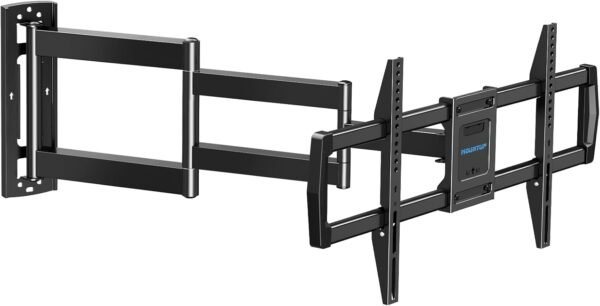
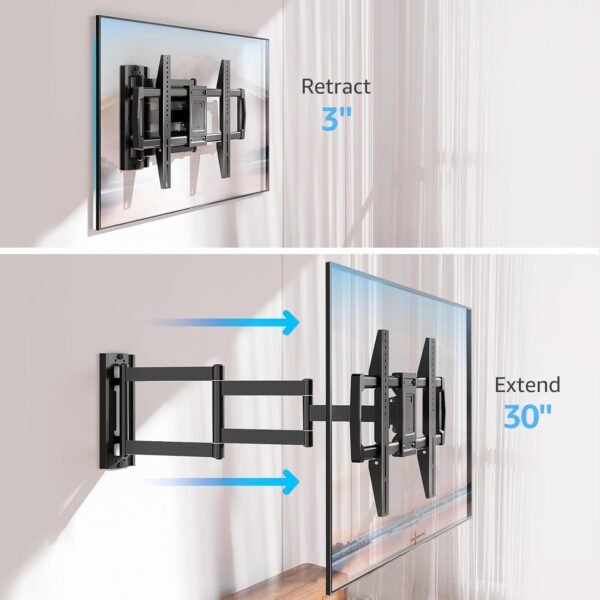
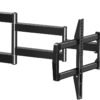
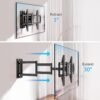
Testing the MOUNTUP Full Motion TV Wall Mount with 30″ Extension & Tilt & Swivel for Most 42-75 Inch TVs has been quite an experience. This mount delivers a flexible extension arm that can extend up to 30 inches and retract back to just about 3 inches from the wall, which is perfect for maximizing space. The triple folding arm design really impressed me; it’s smooth and allows the TV to move effortlessly from corner to corner of the room. Watching movies or catching up on shows while cooking in the kitchen has never been easier thanks to the articulating arm.
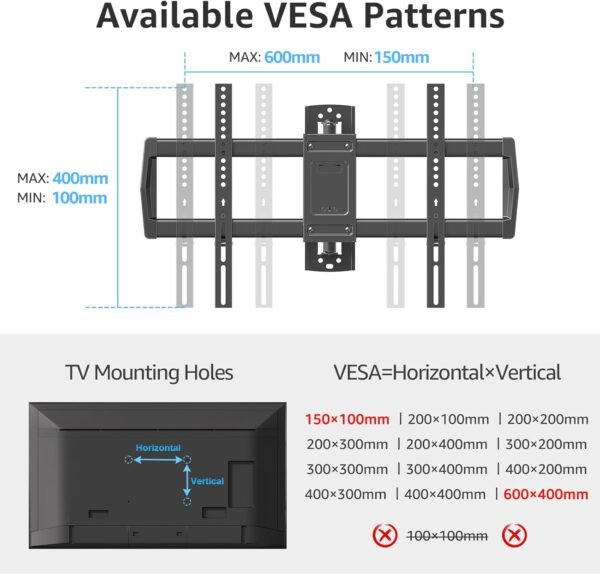
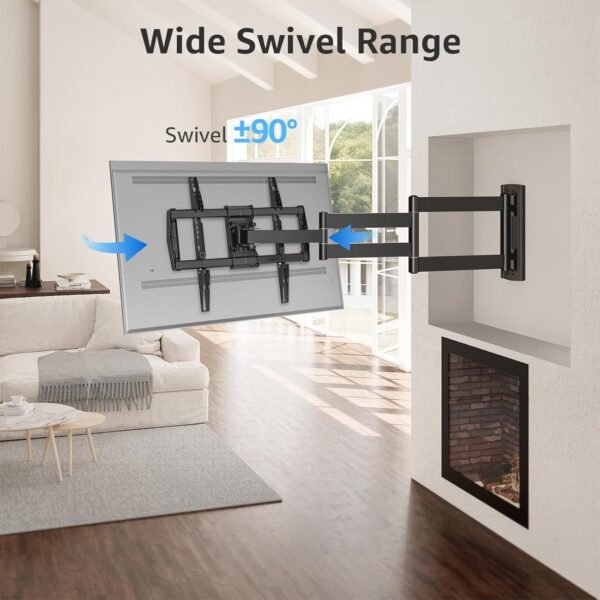
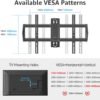
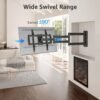
Another feature I found quite handy is the +/- 90° swivel, which lets me adjust the TV angle without any hassle. Tilting the screen up or down by +5°/-10° helps reduce glare from windows, and the slight +/- 3° leveling adjustment ensures the picture stays perfectly straight, even if the mount isn’t installed perfectly level. The universal compatibility with TVs ranging from 42 to 75 inches and VESA patterns up to 600×400 mm covers a wide range of models, making this mount a versatile choice for almost any living room setup.
- Extends 30 inches for flexible viewing angles
- Supports TVs up to 99 lbs and VESA up to 600×400 mm
- Smooth swivel and tilt adjustments for optimal positioning
Drawbacks I Noticed
Despite the many perks, a few limitations surfaced during my use. The mount is designed for single stud wall installation, which can be tricky depending on your wall structure. I had to double-check that my wall studs were sturdy enough to hold the weight. The instructions emphasize not to mount into drywall alone, so if your wall doesn’t have accessible studs or concrete backing, installation might require extra effort or professional help.
The weight limit of 99 lbs is respectable but a bit limiting if you own heavier TVs or additional accessories attached to the TV. Also, the bulky long arm extension may feel a bit heavy when fully extended, so maneuvering it might require two hands for larger screens. For people with smaller spaces, the full extension might not be practical.
- Requires secure stud or concrete mounting, not drywall alone
- Weight limit may exclude some heavier TVs
- Long arm can feel heavy and unwieldy when fully extended
Design and Build Quality Insights
The black finish fits well with most modern home theater setups, and the metal construction feels robust and reliable. At around 13.64 pounds, the mount is solid but not overly heavy, which made handling it during installation manageable. The package dimensions are compact enough to ship conveniently, and the included mounting kit has most of what you need unless you need special anchors for concrete walls.
What stood out in the design was the corner mounting capability. If you have limited wall space or want to optimize viewing angles in an unconventional room layout, this mount’s design lets you put the TV in corners without awkward gaps or weird angles, which many other mounts don’t accommodate well. It truly adds a stylish and functional touch to the living space.
Functionality and User Experience
Adjusting the TV on this mount is straightforward. The articulating arm’s smooth movement lets you swivel the screen left or right with minimal effort, and the tilt mechanism is intuitive to use for glare reduction. I appreciated the leveling adjustment, which helped me avoid the frustration of a crooked TV after installation.
The installation guide is fairly clear, including a bubble level and mounting template, which made aligning the mount easier. However, the mounting process still requires some patience and basic tools. Having concrete anchors available upon request is a nice touch for those mounting on masonry walls.
Competitive Options and How This Mount Stands Out
Comparing this full motion mount to popular competitors like the Sanus VMPL50A or the VideoSecu ML531BE, a few things became clear. This mount offers one of the longest extension arms at 30 inches, which most competitors don’t match. That provides superior flexibility if your living room requires wider viewing angles or corner mounting.
On the downside, some rivals offer higher weight capacities or more premium finishes, but this mount is more affordable and still sturdy. The corner mounting feature is a notable advantage over many competitors that lack this option. However, if you’re looking for a mount with motorized adjustments or ultra-sleek ultra-low-profile design, those competitors might be a better fit.
Price Performance and Value Assessment
Given its robust features, extended arm length, and wide compatibility, the mount offers strong value against similarly priced wall mounts. The combination of full motion articulation, corner-mount capability, and solid construction means you aren’t just buying a basic wall bracket—you’re getting a versatile, space-saving solution.
While the price is not the lowest on the market, the flexibility and build quality justify the cost. It strikes a balance between affordability and premium functionality without pushing your budget into the high-end category. For anyone needing a durable, flexible mount for medium to large TVs, it feels like money well spent.
Installation Experience and Practical Use
Installing this mount was mostly straightforward, especially with the included step-by-step manual, mounting template, and bubble level. I found the hardware to be of good quality, with clear instructions on the type of wall anchors needed for different surfaces. However, I recommend having a second person around to help hold the TV during mounting, especially with larger screens.
After installation, using the mount daily felt intuitive. Moving the TV to different angles for watching from various spots in the room was smooth, and the stability was reassuring. The tilt and swivel adjustments didn’t loosen over time, which speaks to the quality of the joints and materials.
Highlights of Features That Make a Difference
The 30-inch long arm is a standout feature, providing an impressive range of motion that many mounts simply don’t offer. This arm folds neatly back toward the wall when not extended, saving space and reducing the TV’s profile. The corner mounting design is incredibly practical for homes with unique layouts, enabling viewing from multiple angles without obstruction.
The universal fit for TVs between 42 and 75 inches with VESA patterns up to 600×400 mm means compatibility is broad. Plus, supporting TVs up to 99 pounds covers most of today’s popular models. The combination of tilt, swivel, and leveling adjustments ensures that you can fine-tune your setup for the best possible viewing experience.
Overall, this mount delivers a blend of versatility, strength, and style that makes it a solid choice for many users looking to optimize their TV viewing space.


