
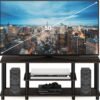
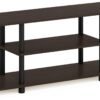
Description
Positive Features of the Furinno Turn-N-Tube Entertainment TV Stand
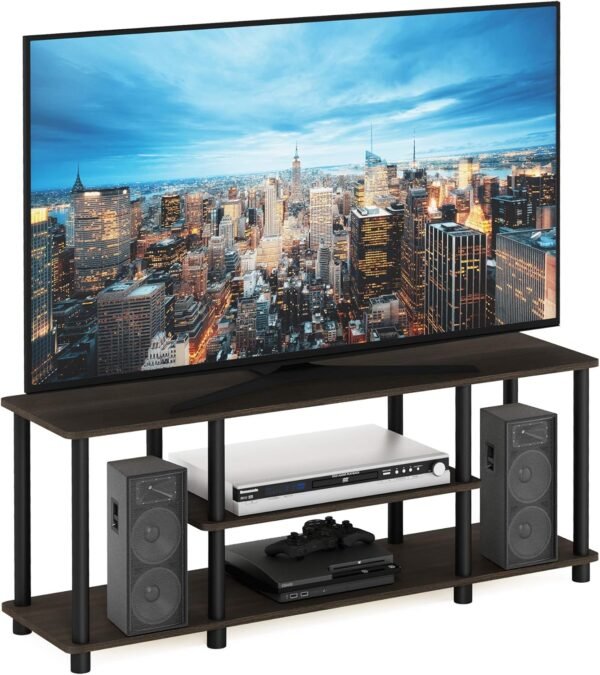
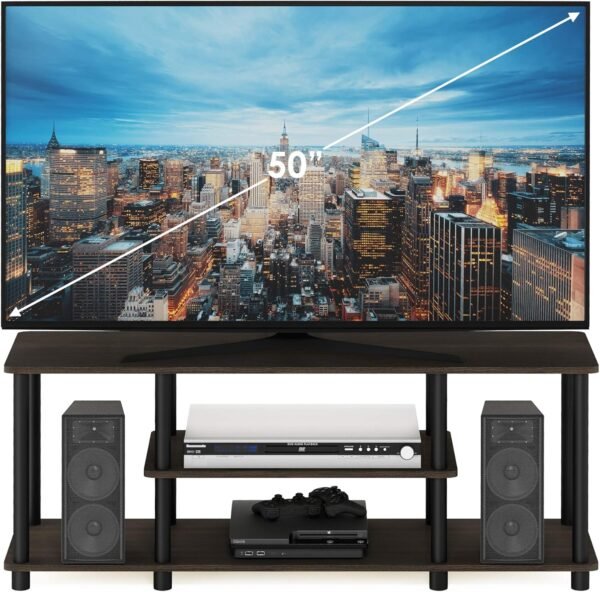
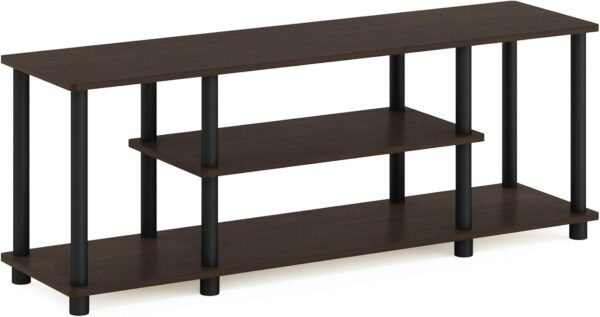
The Furinno Turn-N-Tube No Tools 3D 3-Tier Entertainment TV Stand impressed me with its easy assembly process. It doesn’t require any tools, which means I didn’t have to hunt for a screwdriver or drill. The unique twist, turn, and stack mechanism made putting it together straightforward and even enjoyable—my kids got involved, turning the assembly into a fun activity instead of a frustrating chore. The durable recycled PVC tubes combined with engineered particleboard provide a surprisingly sturdy feel for a lightweight piece of furniture. This stand can hold TVs up to 50 inches and support weight up to 40 lbs, which fits my television perfectly without any wobbling.
- No tools required for assembly
- Uses eco-friendly materials like recycled plastic tubes and particleboard
- Supports TVs up to 50 inches and 40 lbs
- Rounded edges for added safety around kids
Drawbacks to Consider
Although the no-tools assembly is a blessing, the material quality shows its budget-friendly nature. The particleboard, while stable, isn’t as solid as solid wood or metal, so I noticed a slight flex when pressing hard on the shelves. This might be a concern for heavier items besides the TV itself. Another thing I found a bit frustrating was the limited depth of the shelves, measuring about 11.7 inches, which means some larger audio/video components or gaming consoles might not fit well. Also, the black finish tends to show fingerprints and dust more visibly, requiring regular wiping to keep it looking neat.
- Particleboard is less robust compared to solid wood furniture
- Shelf depth may limit placement of larger devices
- Black finish attracts fingerprints and dust easily
- Not ideal for very heavy or bulky equipment beyond TV weight limits
Compact Design and Space Efficiency
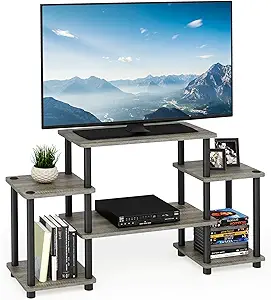
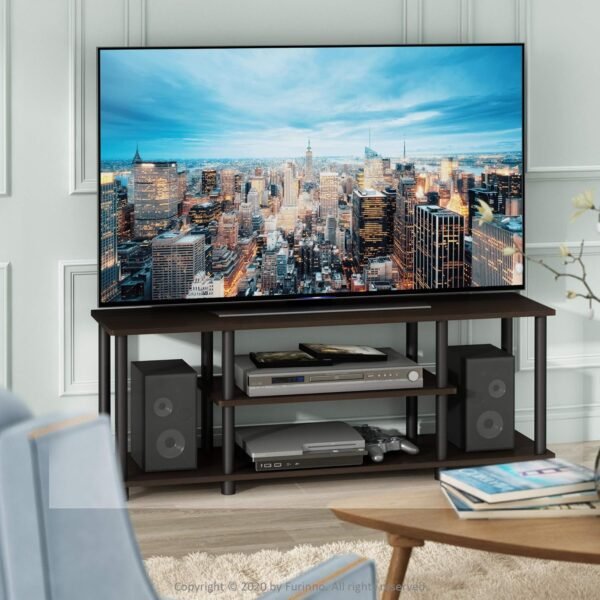
This entertainment stand offers a simple and stylish design that fits various room styles, from modern to minimalistic. Its compact dimensions (43.8 x 11.7 x 16.2 inches) make it an excellent option for smaller living rooms, apartments, or bedrooms where floor space is limited. I appreciated the open shelving layout, which provides easy access to connected devices like DVD players, soundbars, or streaming boxes. Plus, the rounded edges reduce the risk of injuries, which was reassuring since I have toddlers running around the house.
Material Quality and Environmental Considerations
The particleboard used in this stand is manufactured in Malaysia and adheres to green production standards, which was a pleasant surprise. It’s made from 15mm composite wood with PU lamination, making it relatively resistant to scratches and moisture compared to cheaper alternatives. The PVC tubes are recycled plastic, adding an eco-friendly touch to the product. I found the absence of any strong chemical or foul odor refreshing, especially important in enclosed spaces. This stand seems like a thoughtful choice for those looking for functional furniture with sustainability in mind.
User Experience and Versatility
Using this entertainment center daily has been mostly positive. Setting up my TV, cable box, and a few decorative items on the shelves felt intuitive. The open design also helps with ventilation, which is crucial to avoid overheating electronic devices. However, since the shelves are open, dust accumulates faster than on enclosed cabinets, so I found myself wiping down the surfaces more often than usual. The stand’s lightweight nature means it’s easy to move around if I want to change room layouts. My family appreciated the child-safe rounded edges and the low-maintenance cleaning routine—just a damp cloth is enough, avoiding harsh chemicals.
Product Competitors and Comparison
Compared to other budget-friendly TV stands like the Ameriwood Home Carson TV Stand or the Mainstays Parsons TV Stand, this one stands out due to its tool-free assembly and use of recycled materials. The Carson stand offers more enclosed storage, which is great for hiding clutter but sacrifices the ease of access. The Parsons model is sturdier but heavier and requires more effort to assemble. The Furinno stand’s lightweight structure and quick setup give it an edge for those who don’t want to wrestle with furniture assembly or sacrifice environmental considerations. It falls short, though, in shelf depth and material strength compared to heavier-duty options, so it depends on what features you prioritize.
Price Worthiness
Evaluating the price to quality ratio, this entertainment stand offers solid value for its cost. It’s not a luxury piece, but it covers all the basics well—sturdy enough for an average flat-screen TV, quick to assemble, and environmentally conscious. If you want a budget-friendly TV stand that looks decent, assembles in minutes, and doesn’t require tools, this is a smart pick. However, if you need something with more storage space, deeper shelves, or a more premium finish, you might want to look at pricier options. Overall, it’s worth every penny for straightforward functionality without the headache.
Final Thoughts on Functionality and Style
This entertainment stand balances functionality, simplicity, and eco-awareness in a way that’s hard to beat at this price point. Its no-hassle assembly process and lightweight design make it ideal for renters, students, or anyone who might move frequently. The compact size suits small spaces perfectly, and the rounded edges bring peace of mind for families with young kids. While it’s not without flaws—such as shelf depth limitations and some material compromises—the versatility and ease of use more than make up for those minor issues. My experience with this product has been mostly positive, and I’d recommend it to anyone looking for a no-fuss TV stand that gets the job done efficiently.