
Description
Positives That Make Training Easier
Testing the Eorery Dog Bark Deterrent Devices Rechargeable Anti-Barking Device WH-QGQ01 has been an interesting experience, especially as someone who’s dealt with a noisy pup and a few neighborhood complaints. The 2-in-1 ultrasonic technology is a standout feature. It’s painless and shock-free, which means no more guilt trips for trying to keep my dog’s barking in check. The device emits a 25kHz fixed ultrasonic frequency that dogs can hear but humans can’t, which is a huge relief for my ears during those impromptu barking sprees.
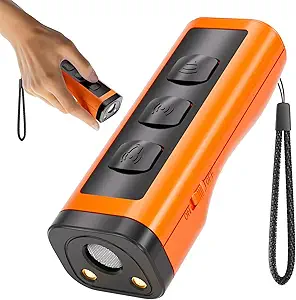
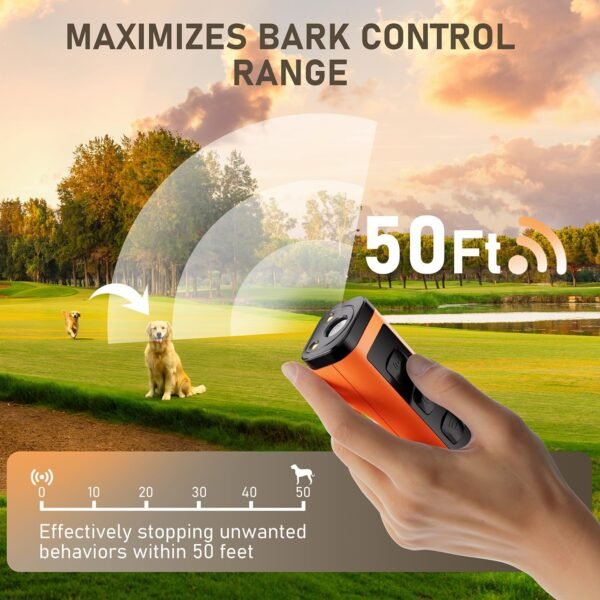
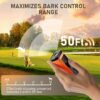
Operating the device is simple—just push the button when the dog barks, and the sound startles without causing pain. The 50ft long-range is impressive; I’ve used it both indoors and outdoors, and it works well in both settings without losing effectiveness. The flash mode also deserves a shout-out. I found it handy for deterring not just my dog’s barking but also warding off aggressive dogs during neighborhood walks—an unexpected bonus that adds to safety.
Some key plus points I noticed:
- USB fast charging means it’s ready to go in just an hour.
- The battery life lasts up to 60 days, so I don’t have to constantly worry about recharging.
- Compatible with small, medium, and large breeds, which makes it versatile for households with multiple dogs.
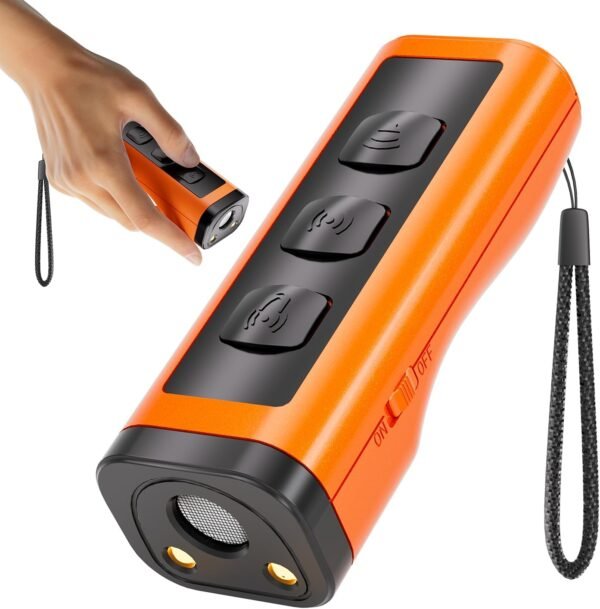
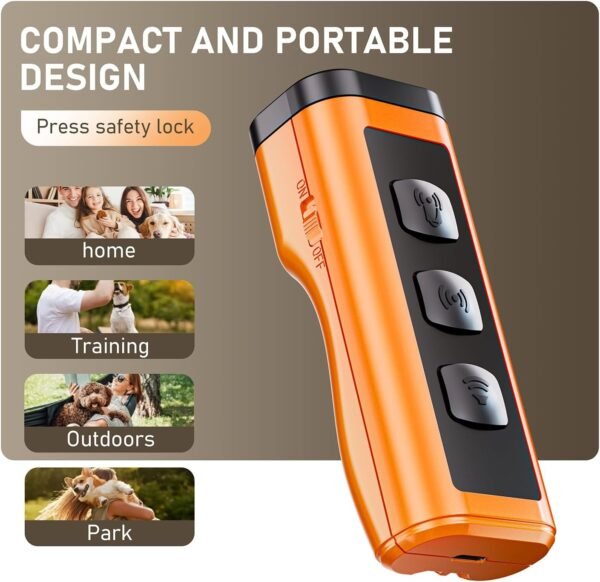
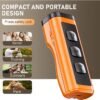
- The device is compact and lightweight (4.2 ounces), with a handy wrist strap that I appreciated for on-the-go training sessions.
Drawbacks Worth Mentioning
Despite its strengths, some aspects of the device left me wanting a bit more. The ultrasonic frequency is fixed at 25kHz, so there’s no option to adjust it for different sensitivities or situations. I found that for some particularly stubborn barking bouts, having a customizable frequency might’ve made a difference.
The device size is slim and portable, but the button can be a bit tricky to press quickly if you’re holding it awkwardly or wearing gloves. I imagine this could be a problem for people with larger hands or during colder months when dexterity is compromised.
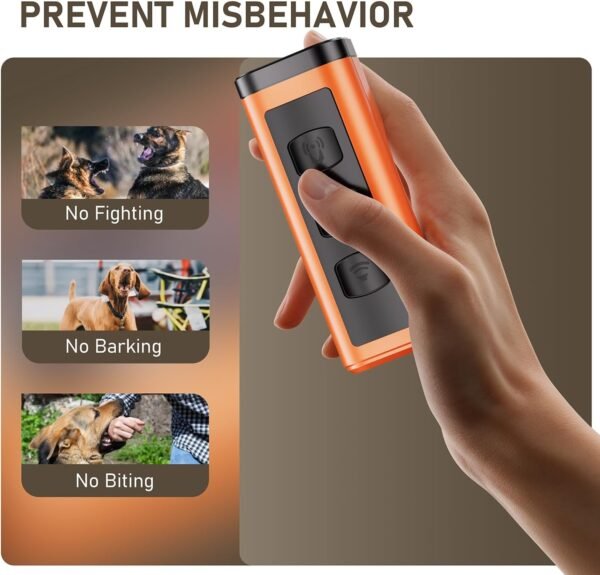
Another point that came up during my testing was that the effectiveness varies depending on the dog’s personality and training level. While my dog responded well after a few uses, my friend’s more anxious pup barely noticed it. This is important to keep in mind if you’re expecting a one-size-fits-all solution.
Here are some of the downsides I experienced:
- No adjustable ultrasonic frequency limits customization.
- Button placement and size could be improved for ease of use.
- Variable effectiveness depending on the dog’s temperament.
- The device requires a single AA battery, which is included, but I wish it had a rechargeable internal battery for convenience.
Ease of Use and Practical Features
The device impressed me with its multi-functionality beyond just bark deterrence. The flash mode not only helps control barking but also serves as a non-threatening way to deter aggressive dogs during walks, jogs, or bike rides. I found this particularly useful when passing by unfamiliar dogs or wildlife.
Its compact form factor and lightweight design make it easy to carry around, and the wrist strap is a thoughtful addition that keeps it secure during active use. The USB fast charging is a modern convenience I didn’t expect in this type of product, and it fully charges in an hour, which is perfect for busy schedules.
I also appreciate the safety aspect, as the device causes no shock, vibration, noise, or physical contact. This makes it a gentler alternative to traditional bark collars or shock-based training aids. My dog seemed less stressed during training sessions, which made the whole experience more pleasant for both of us.
Comparing to Other Anti-Barking Devices
Looking at other products in the market, this ultrasonic bark deterrent holds its own but has some competition. For example, some bark collars offer vibration or static correction, which can be more immediately noticeable to the dog, but those come with the downside of potentially causing distress. This device shines by being completely pain-free and silent to humans, which is a big plus.
Compared to bark whistles, which rely on the dog’s reaction to sound, this device’s ultrasonic waves are more targeted and effective. However, some competitors offer adjustable frequencies or multiple training modes, which this device lacks. That limits its flexibility for dogs with different hearing sensitivities or stubborn behavior patterns.
In terms of portability and battery life, this device beats many rivals because of its 60-day battery life and quick USB charging. Many other trainers require frequent battery swaps or don’t have USB charging options, which can be annoying.
Summing up the competition:
- Excels in safety and humane training methods compared to shock collars.
- Offers better portability and battery life than many similar products.
- Lacks adjustable frequencies and multiple training modes found in some competitors.
- Flash mode for deterring aggressive dogs is a unique safety feature not commonly found elsewhere.
Price Worthiness and Value
Evaluating the cost against what’s on offer, this dog bark deterrent provides solid value for money. Considering the fast charging, long battery life, and humane training approach, it feels like a smart investment for anyone looking to improve their dog’s behavior without resorting to harsh methods.
The device also covers a wide range of dog sizes, which means you’re not limited to a specific breed or weight class. This broad compatibility adds to its appeal, especially for multi-dog households.
While it may not fully replace professional training or work for every dog equally, the convenience of a portable, safe, and easy-to-use ultrasonic trainer is worth the price for many dog owners. It’s a budget-friendly alternative to more expensive shock collars or training gadgets that might be less kind to your pet.
Design and Build Quality
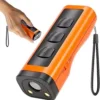
The device’s sleek orange design is eye-catching without being over the top. It’s slim and lightweight, making it comfortable to hold and easy to slip into a pocket or attach via the wrist strap. The dimensions (15.75 x 0.79 x 0.04 inches) make it unobtrusive, yet the button stands out enough to be found quickly.
Durability seems decent; it feels solid in hand and doesn’t creak or rattle. Although I haven’t subjected it to extreme conditions, it handled everyday bumps and drops without issue. The single AA battery slot makes replacing power sources straightforward, but a built-in rechargeable battery might have been a nicer touch.
The device’s minimalistic design aligns well with its straightforward function, which I appreciate. No confusing settings or complicated setup means anyone can pick it up and start training immediately.
Training Effectiveness and User Experience
Using the device on my dog, I noticed the barking reduced significantly after consistent use, especially in response to environmental triggers like doorbells or passing strangers. The ultrasonic sound is subtle but effective, causing my dog to pause and reconsider barking without fear or discomfort.
My kids even got involved in the training process, and they found the device easy to operate—no complicated buttons or confusing modes. That’s a big plus for families wanting to share responsibility for pet training.
However, some dogs might require additional motivation or professional training alongside this device. It’s not a magical fix but rather a helpful tool that can speed up the process when used correctly.
Overall, this trainer offers a gentle, humane, and portable solution with some clever features, though its one-size-fits-all approach might not suit every dog perfectly.